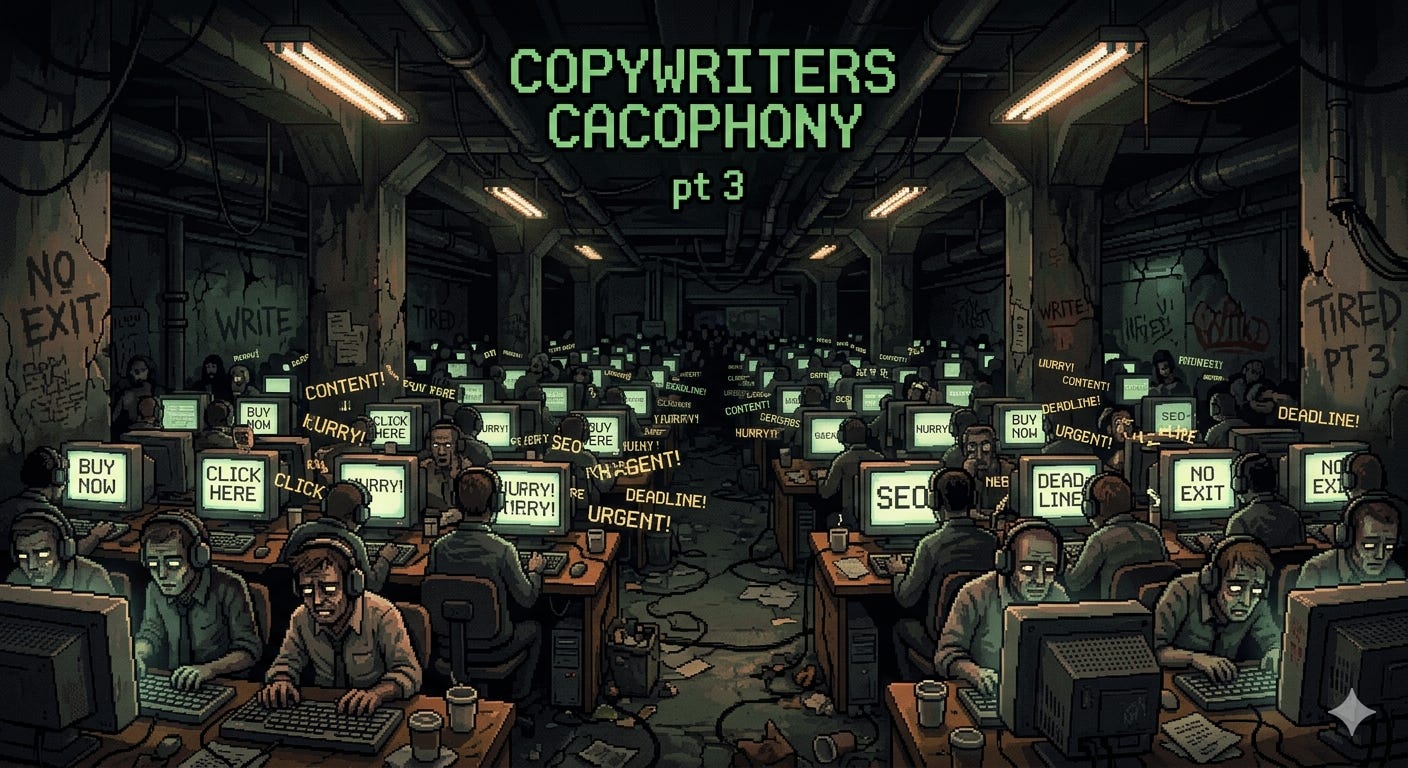
Copywriters Cacophony Pt. 3
If you’re reading this, that means you must have read parts one and two. You’ve seen the life sucked out of your copy and replaced with a soulless AI echo everyone else uses. This is the last part of how copywriters, marketers, business advocates, and everyone else want to separate themselves from derivative content. Without further ado, let’s get into it.
Why sharing standard screenshots makes you look fake, and how to display bulletproof proof that can’t be fabricated
The typical internet marketer relies on heavily polished, overly cropped screenshots to prove their fake results. And are completely unaware that these digital trinkets read like manufactured fraud to any prospect with a pulse. In other words, you’re swimming in deepfakes and doctored imagery. A bare screenshot holds about as much weight as a three-dollar bill because anyone with a basic editing tool (and AI) can fabricate a million-dollar dashboard in thirty seconds. And if you want bulletproof credibility that forces skeptics to drop their guard, you need to show raw, unedited artifacts that are impossible to forge.
I am talking about live screen recordings where you refresh the browser. One with a visible system timestamps, original URLs, and source files with the forensic metadata left completely intact. You must pair your claims with a verifiable trail of archived pages or searchable keywords so your audience can independently track the proof from multiple angles. When you give people a concrete chain of evidence instead of a glittery graphic design project, you eliminate the friction of doubt and make your offer irresistible. Stop handing your prospects easily faked pictures… (unless you openly give credit to the machine) and start giving them an unassailable data trail that proves you actually do the work.
How to weave storytelling and direct response pitches together so seamlessly that subscribers read your sales copy for fun
It was 2:17 AM, and the blue glare of my laptop screen felt like hot needles poking my eyeballs. I sat staring at a flatlined Stripe dashboard, knowing my mortgage was due in five days. I felt like a fraud, hiding behind a slick website while drowning in silent panic. The next week, I was greeted by angry prospects berating me because our lazy sales rep had ignored their appointments. That was the exact moment the lightning bolt hit: businesses aren’t short on leads… It’s their follow-up, and it’s toxic sludge.
Most operators are one-touch chumps. Pouring thousands into front-end ads while letting real buyers rot in your online graveyard. Meanwhile, the raw data from Ric Forbes at ForbesCopy proves that replacing automated mediocrity with instant, five-minute lead interception jumps conversion rates by one-hundred and five percent.
You don’t need more expensive ads to bring in more traffic… You need a roadmap that forces prospects to stop procrastinating and buy.
A simple rule for deciding exactly what not to say so your business stops adding to the internet noise
Most businesses treat their marketing like a velvet-wrapped dumpster fire. Dumping thousands into ads, then letting the leads rot because their follow-up sucks ass. If your sales reps ignore qualified appointments, you are running a database graveyard, not a business. The cold math of revenue is brutal… But fair. If you don’t intercept a lead within five minutes, your conversion probability jumps off a cliff. Waiting even thirty minutes hands your market share to hungrier competitors.
Most operators are one-touch chumps who give up after one “no,” ignoring the fact that eighty percent of sales happen between the fifth and twelfth contact. Bottom line is this... You don’t need more expensive ads. Instead, turn your corporate slop into liquid cash by squeezing the latent demand already sitting in your CRM.
How to maintain an unshakable, consistent personal identity across platforms while the rest of the industry chokes on video trends
Break consumer numbness by speaking like a human and not a brand. Use plain sentences and the exact phrases your customers use to describe their agony. Most marketing is generic corporate crap that prospects ignore because it feels like a lie. Or the copy is fact-checking them to death. To cut through this crap, identify their deepest frustration (the painkiller they need) and agitate it with brutal specificity. Redirect existing desires for comfort and superiority toward your product. Show how it enhances the life they already want instead of manufacturing fake interest. Strip away jargon and admit limitations to build ethical credibility.
When you stop overpromising, you start being heard.
Use emotional trigger words that match their current state of feeling helpless, then shift to discovery as the solution appears. Make the decision low-risk and high-reward. If your message is straightforward and human, the sale feels like relief, not a pitch.
How to break through consumer numbness and write copy that feels human enough to trigger immediate sales
Corporate crappy copy fails because it barks at a market instead of speaking to a human. To shatter consumer numbness, you must stop peddling generic vitamins and offer the exact painkiller your prospect needs. Use the raw, specific phrases of their deepest frustration to channel their desire for comfort directly into your solution.
Strip away the corporate jargon and fake scarcity, so your words read like ethical relief rather than a greasy sales pitch. When you balance honest empathy with a vivid picture of their future success, buying becomes a completely natural decision. Keep the transition low-risk and simple so your prospect takes action without a single second thought.
If you’re tired of the Copywriters Cacophony, you should definitely buy my book L.O.A.P. Marketing so that you can be the “Pick Me” company that everyone looks for, by showing you how to be a devil’s advocate to increase your clients’ LTV.
Ric Forbes
Written by Ric Forbes with first-hand expertise. AI tools may be used for research and drafting assistance, but all content is reviewed, verified, and published by the author.