
Idiosyncratic Marketing: The Foolproof Strategy to Capture Customers with Blind Ears & Deaf Eyes for Lazy, Sky-High Returns
Picture the average person your ads are trying to reach right now…
You know that most aren’t at their desk, nor are they focused. They’re most likely on a couch, or in a car, or in line somewhere, with their phone in hand, thumb moving sporadically, sound completely off because they're in public, or they just don’t feel like hearing anything.
They‘ve already scrolled past forty things in the last two minutes and remembered none of them.
Full of opinions, low on patience, and their brain is running a constant background program that filters out anything that registers as a sales pitch before it ever reaches conscious thought.
That’s your customer…
That’s who you are writing for, filming for, and spending money to reach. And yet the loudest voices in marketing right now are selling you AI prompt stacks off GitHub and content calendars from Notion as if the problem is a lack of output rather than a lack of craft. Sad to say, those who said they’ve “cracked the code” are outright liars and con artists. Flaunting their automated mediocrity and calling it a “system.”
What the AI can’t tell you, because it has never been bored, never been distracted, never sat somewhere half-present and had a piece of copy reach through the noise and actually grab it by something real, is how to engineer a message that works on a human being who’s barely looking and barely listening.
Keep reading to deploy the exact, story-driven marketing secrets that command absolute attention and force deaf eyes and blind ears to devour your message so you can unlock a predictable, daily flood of cash into your business.
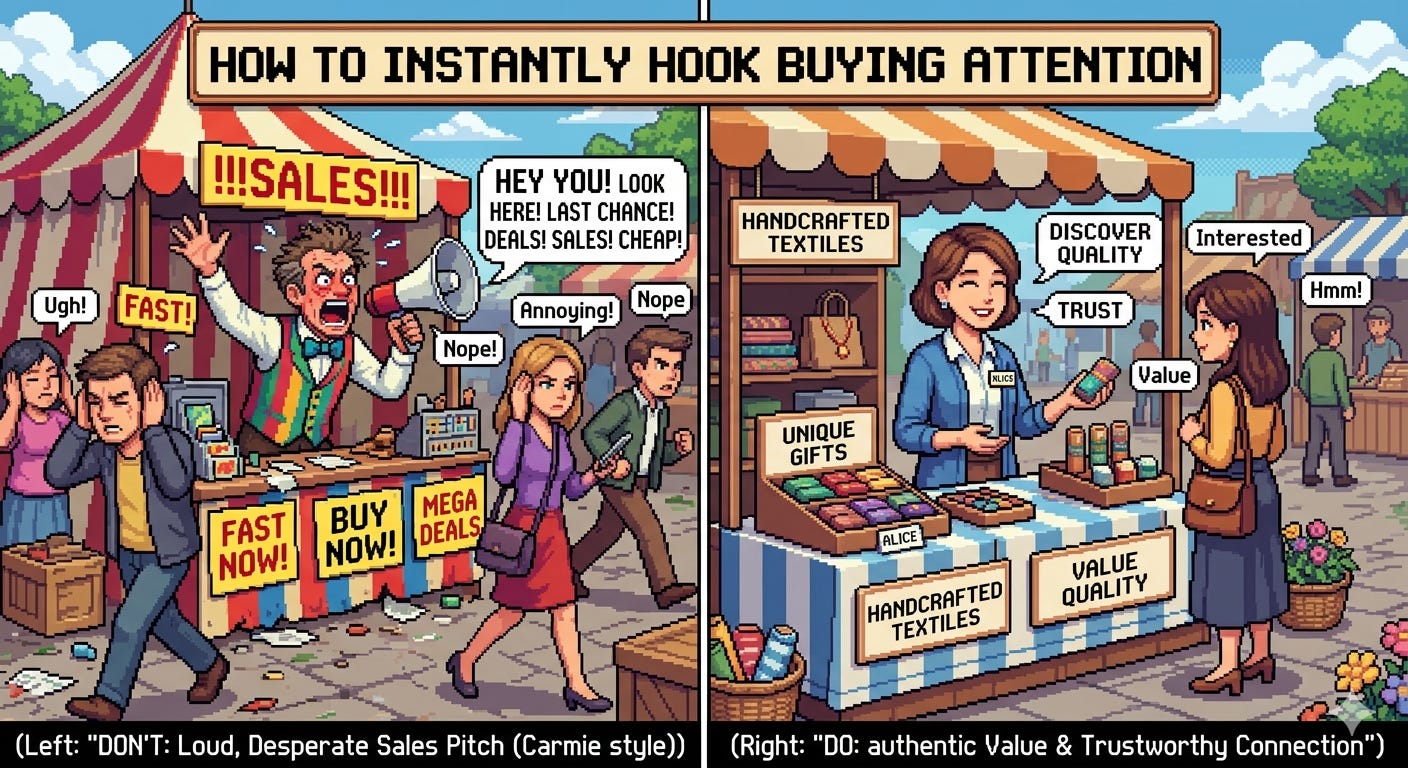
How to Instantly Hook Buying Attention Without Sounding Like a Desperate, Screaming Carny
Hooking your audience’s attention is more crucial than ever. And most marketers sound like sweaty boardwalk hucksters screeching about discounts because their copy‘s too weak to command attention on its own merit.
To instantly hook a real human buyer by dropping them face-first into a raw, high-stakes story that touches a deep, unconfessed frustration they lay awake thinking about at 2:14 AM.
This quiet, story-driven authority naturally cuts through the deafening corporate white noise without you ever having to resort to desperate exclamation points or aggressive sales tricks. By the time they finish your first paragraph, the prospect’s already sold on your perspective and chasing you for the solution.
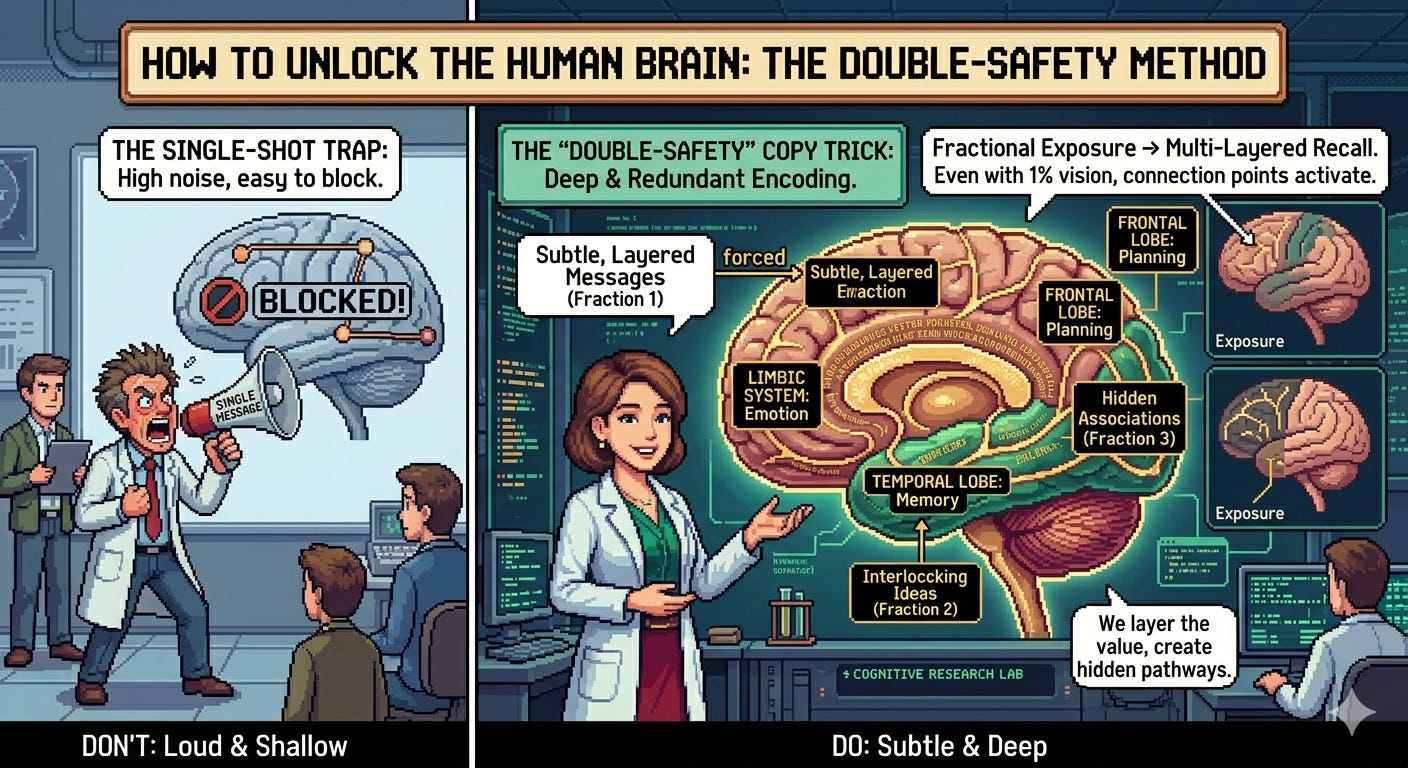
The Hidden “Double-Safety” Copy Trick That Forces Your Message Into Human Brains Even If They Only Catch a Single Fraction of Your Ad
Marketing is almost like gambling. I’ve seen marketing budgets incinerated on the hope that a distracted prospect reads every line of the bloated, self-serving pitch. The “Double-Safety” trick involves layering your core sales hook into both the high-visibility headlines and rapid-fire “skimmer” elements like bullets and P.S. line.
Creating this redundant psychological loop where even a three-second glance forces the big, profitable idea into the reader’s brain. You stop praying for total attention and start engineering your copy so it sells effectively even when your audience is half-asleep or scrolling at a breakneck pace.
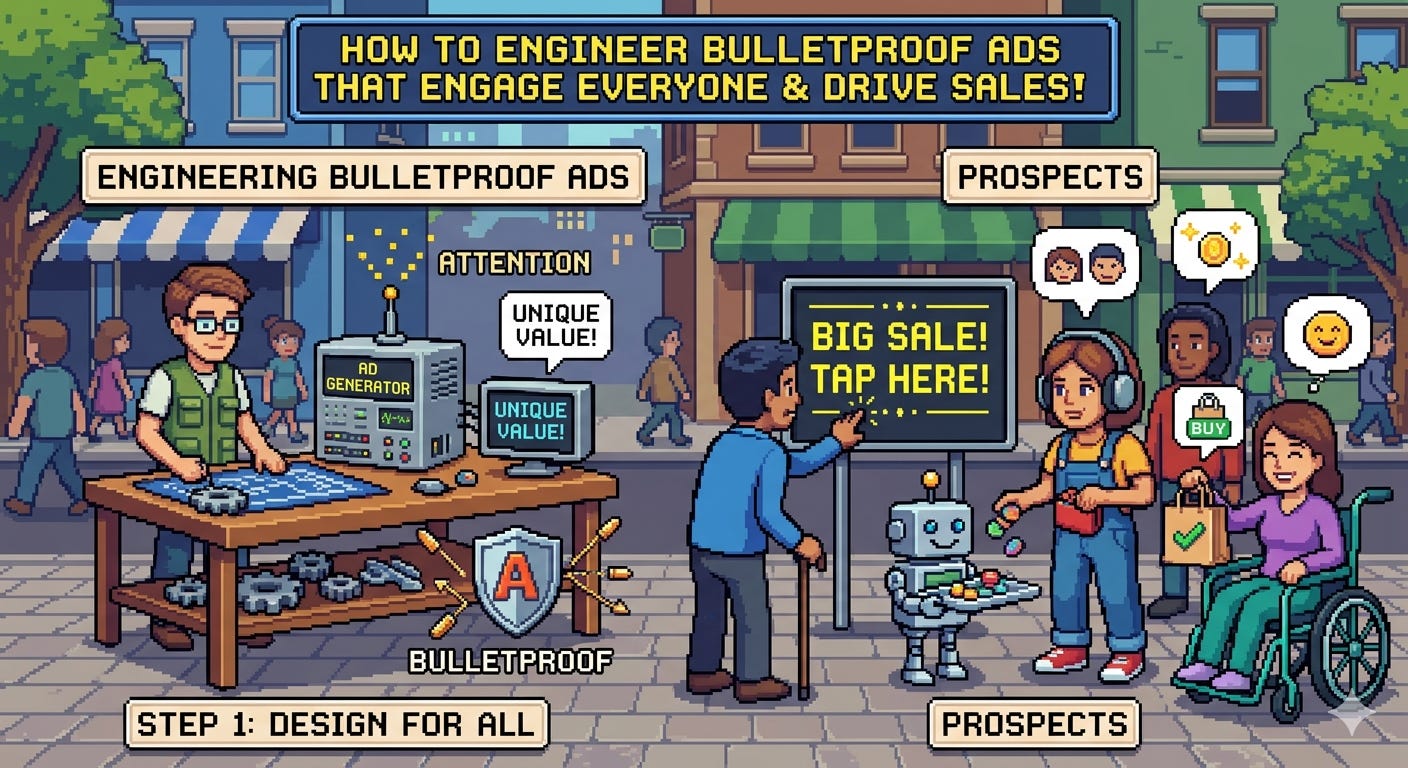
How to Engineer Bulletproof Ads That Force Deaf, Dumb, and Blind Prospects to Pull Out Their Wallets and Buy
Mainstream advertisers treat accessibility like a boring corporate compliance chore, completely missing the massive pool of buyers eager for someone to treat them like real human beings.
You dominate this market by engineering descriptive audio that paints vivid, high-emotion pictures for the blind while using hard-hitting, sensory-rich captions that scream benefits to the deaf. This multi-sensory direct response approach ensures your core psychological hook penetrates deep into the brain, regardless of physical barriers.
By refusing to let technical limits kill your message, you tap into a fiercely loyal, completely ignored audience that is ready to buy the moment you respect them enough to speak their language.
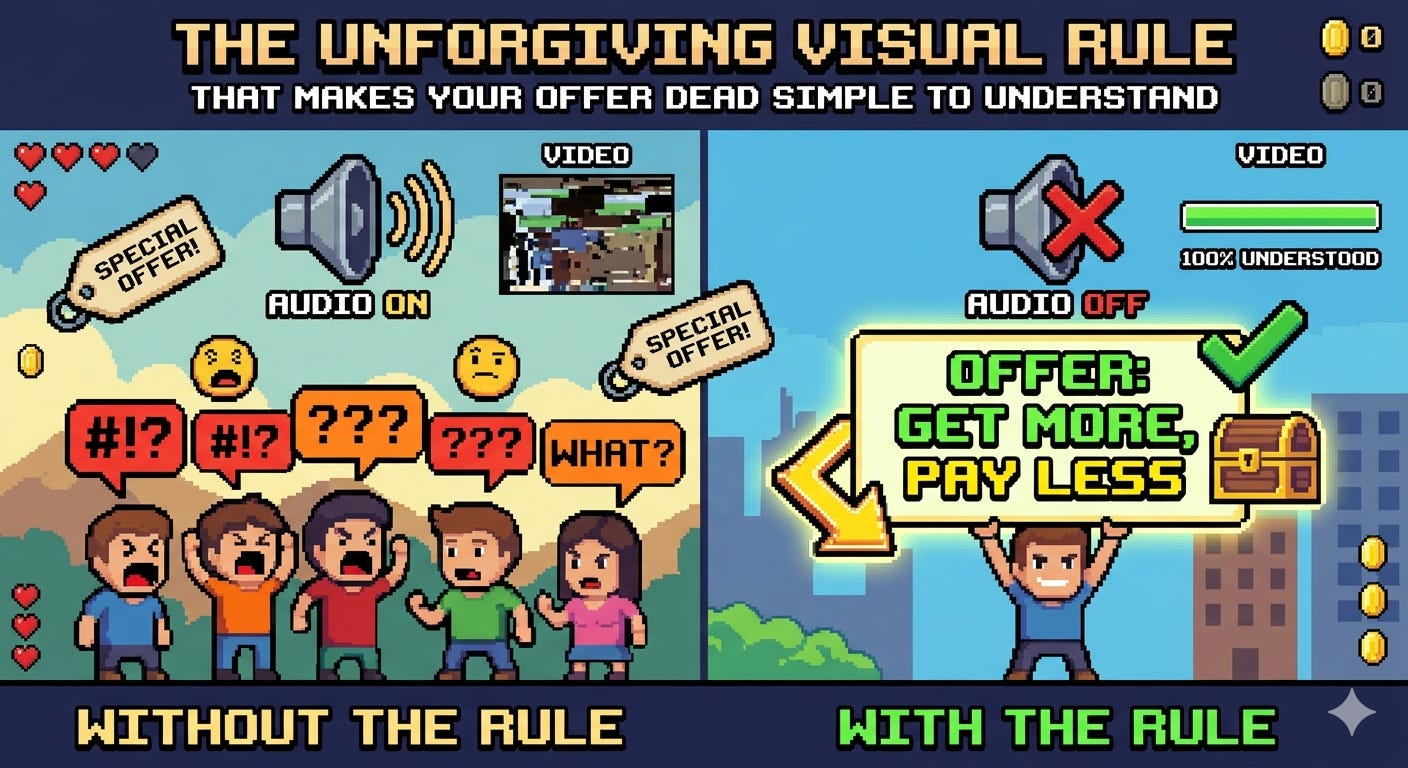
The Unforgiving Visual Rule That Makes Your Offer Dead Simple to Understand With the Sound Turned Completely Off
According to multiple publishing companies, more than eighty percent of social media users scroll through their feeds with the sound turned completely off, meaning your expensive audio track is playing to an audience of ghosts.
The unforgiving rule is simple: a prospect must be able to understand your exact offer, the primary benefit, and how to buy within three seconds of muted viewing.
This is done by plastering bold, high-contrast text overlays and clear, physical demonstrations of your product directly onto the screen. If someone can’t instantly get the entire point of your ad while sitting in a noisy room with their phone on mute, your creative’s broken, and you are incinerating your budget.
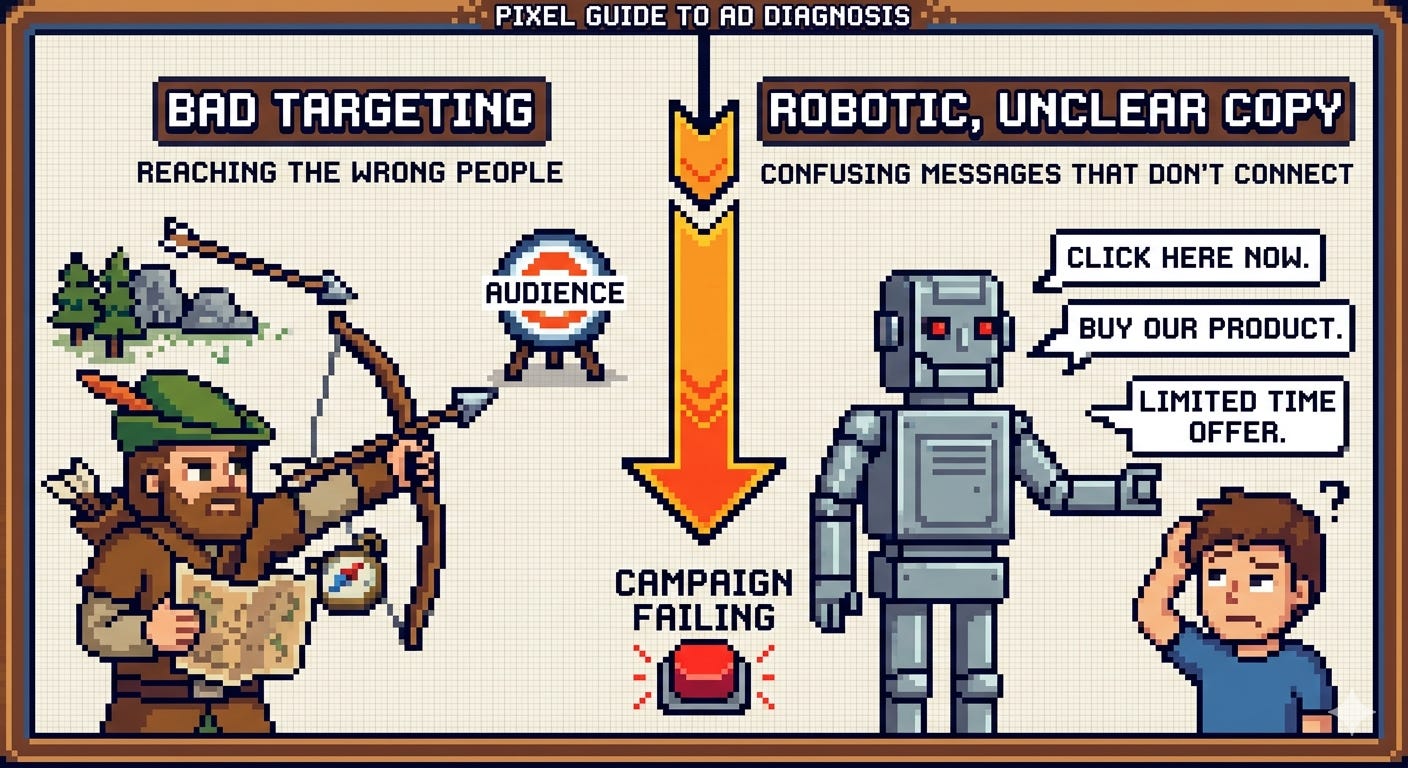
How to Spot the Precise Moment Your Ad Campaign Is Failing Due to Bad Targeting Versus Unclear, Robotic Copy
Something I picked up a while ago from the NothingHeldBack Facebook group was to distinguish between a targeting failure and a robotic copy failure…
You must look at the gap between clicks and conversions.
If your ad has a high click-through rate but zero sales, your targeting is likely perfect, but your stiff, robotic copy is failing to build the trust needed to close the deal.
Conversely, if your ad has a high cost-per-click and zero engagement, you are likely shouting the right message into the wrong room. Realizing your ad is failing becomes obvious when your “robotic” copy gets ignored like a spam filter, while bad targeting results in paying for clicks from people who never intended to buy.
The Raw, Politically Incorrect Customer Questions You Must Ask to Extract the Deepest Desires and Fears of Your Audience
To extract the raw truth, you must stop asking polite, corporate survey questions and start uncovering what your customer secretly whispers when they are angry or desperate.
Ask yourself: “What do they blame for their failures when nobody is listening, and what is the embarrassing secret they would pay anything to hide from their peers?”
The deepest desires reveal themselves only when you isolate their pettiest motivations, like wanting status, revenge, or absolute validation, rather than the logical benefits listed in a textbook. You only find the real hooks for your copy when you look at the raw, unfiltered anxieties that keep them awake at three in the morning.
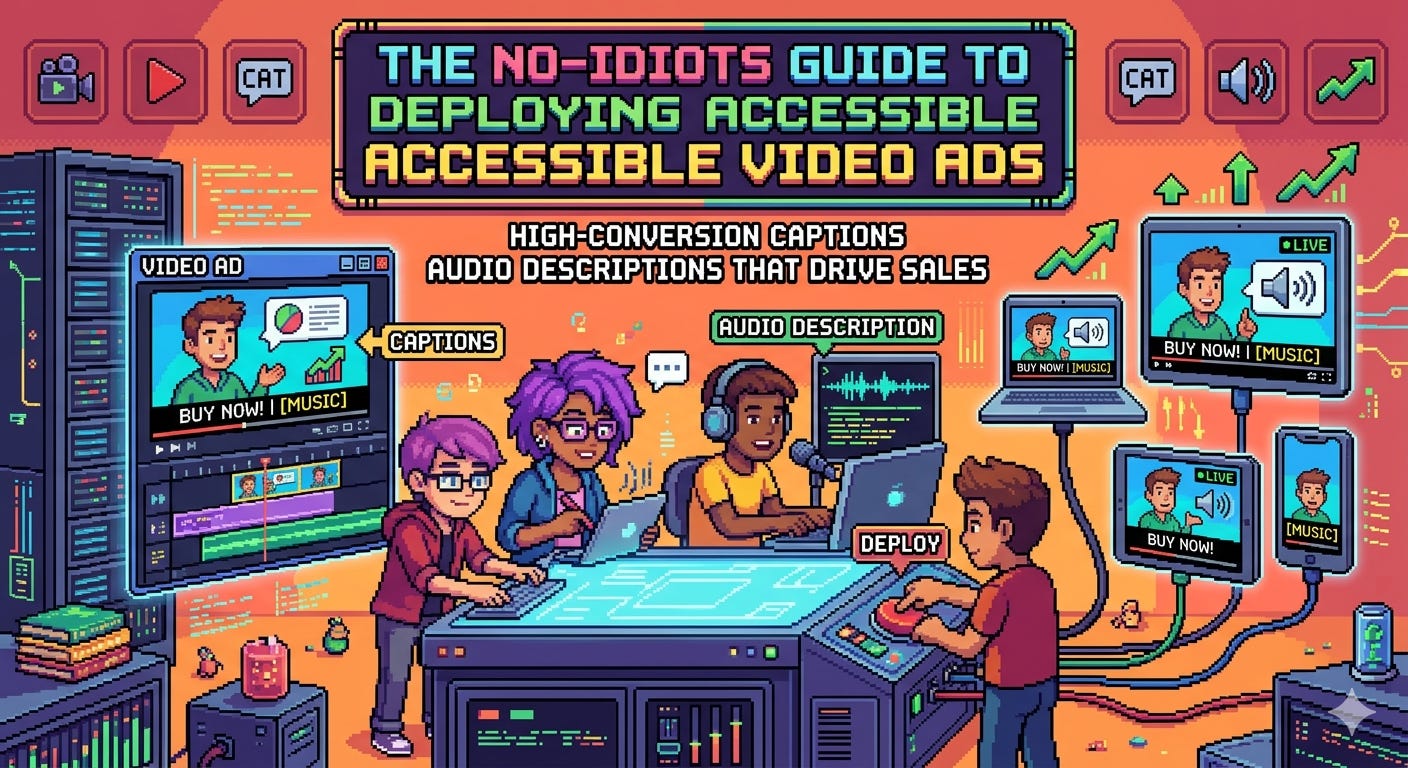
The No-Idiots Guide to Deploying Accessible Video Ads, High-Conversion Captions, and Audio Descriptions That Drive Sales
Most video ads ignore viewers who scroll on silent or have visual and hearing impairments, leaving massive amounts of money on the table. You can fix this by burning high-contrast, high-conversion captions directly into the video to hook the 79% of users who watch on mute.
Next, weave descriptive audio naturally into your voiceover script so visually impaired buyers understand your offer without needing a separate, clunky audio track. This simple setup ensures your marketing hits every single prospect, outshines lazy competitors, and drives maximum sales
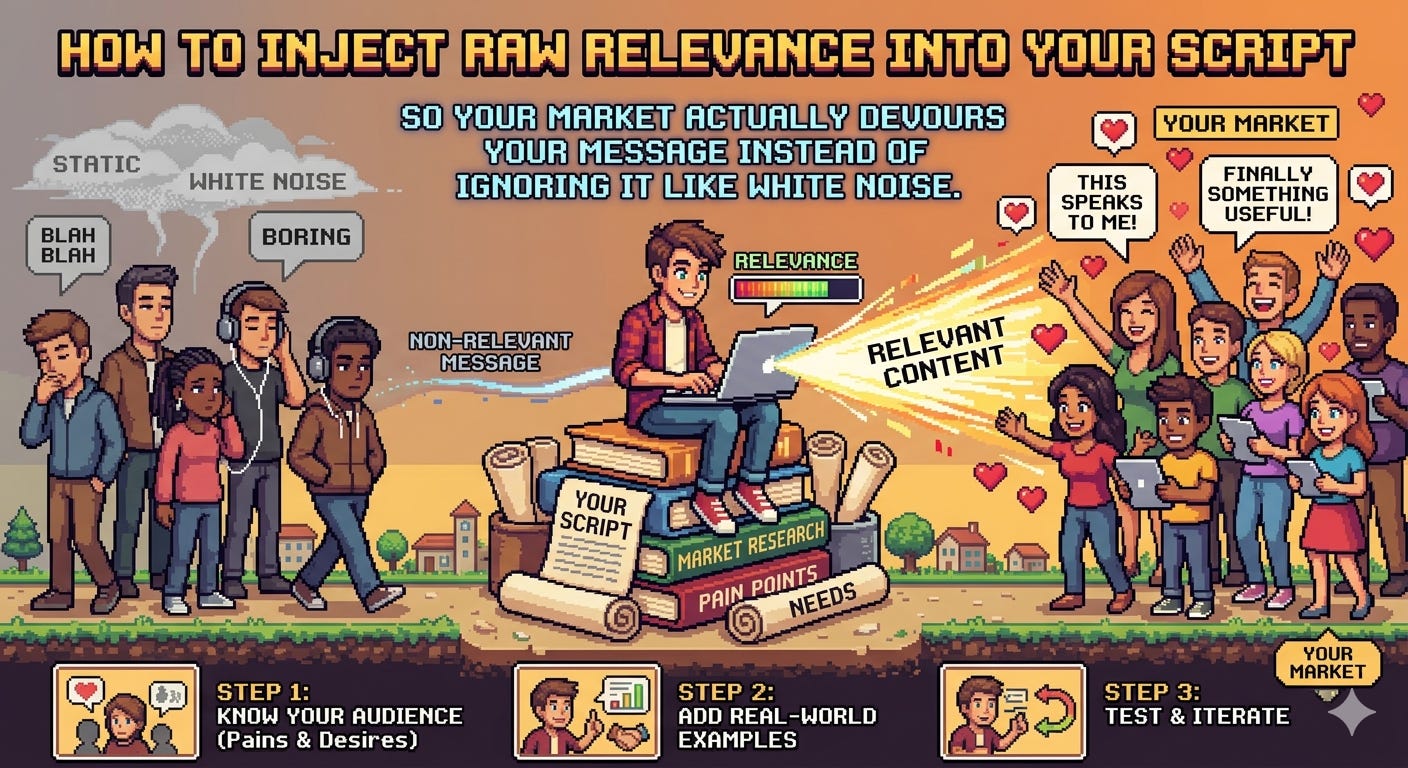
How to Inject Raw Relevance Into Your Script So Your Market Actually Devours Your Message Instead of Ignoring It Like White Noise
To inject raw relevance in your marketing, you must stop talking about yourself and start narrating the specific, private conversation already happening inside your prospect’s head.
Instead of listing generic features, call out their secret frustrations and use their exact vocabulary to describe the “villains” holding them back. You’d think this would be common sense, but it’s not.
When you mirror their reality so accurately that they feel exposed, they stop scrolling and start devouring your message. This psychological bridge transforms your script from background noise into a personalized manifesto they cannot afford to ignore.
Stop flushing your marketing budget down the drain on “automated mediocrity” that only talks to itself. While your competitors are busy worshipping at the altar of AI prompt stacks, you can use these exact strategies to build a business that runs on the reliable fuel of human psychology and raw, undeniable relevance.
Be A Business That Commands Attention & Generates Daily Cashflow
By applying these laws of high-stakes, story-driven marketing, you stop being a “screaming carny” and start becoming a dominant authority in your niche. You’ll possess the rare skill of engineering copy that works on a distracted, cynical human being who’s barely looking and not even listening.
Here’s the bottom line: your ads will finally penetrate the busted ears and crusty eyes of the “silent scroll,” converting skeptical strangers into a predictable, daily flood of cash. You’ll no longer wonder if your message is landing. Instead, you’ll see it in the clicks, the conversions, and the fiercely loyal customers who feel like you are finally speaking their language.
If you are ready to stop “torching” your budget and start deploying marketing that actually reaches through the screen to grab people’s attention by something real, then you need my book.
Grab L.O.A.P. Marketing (Lipstick on a Pig Marketing) right now and stay five-steps ahead of your competition.
Inside, you’ll find the complete, step-by-step system to transform stiff, robotic copy into a personalized manifesto that your market’s forced to devour. This is your chance to master the craft of human-centric marketing and unlock the level of revenue that “automated systems” can only promise but never deliver.
Ciao,
Ric F.
Ric Forbes
Written by Ric Forbes with first-hand expertise. AI tools may be used for research and drafting assistance, but all content is reviewed, verified, and published by the author.